Stuck in time — no mobile network, river & jungle only route to Indo-Nepal border villages
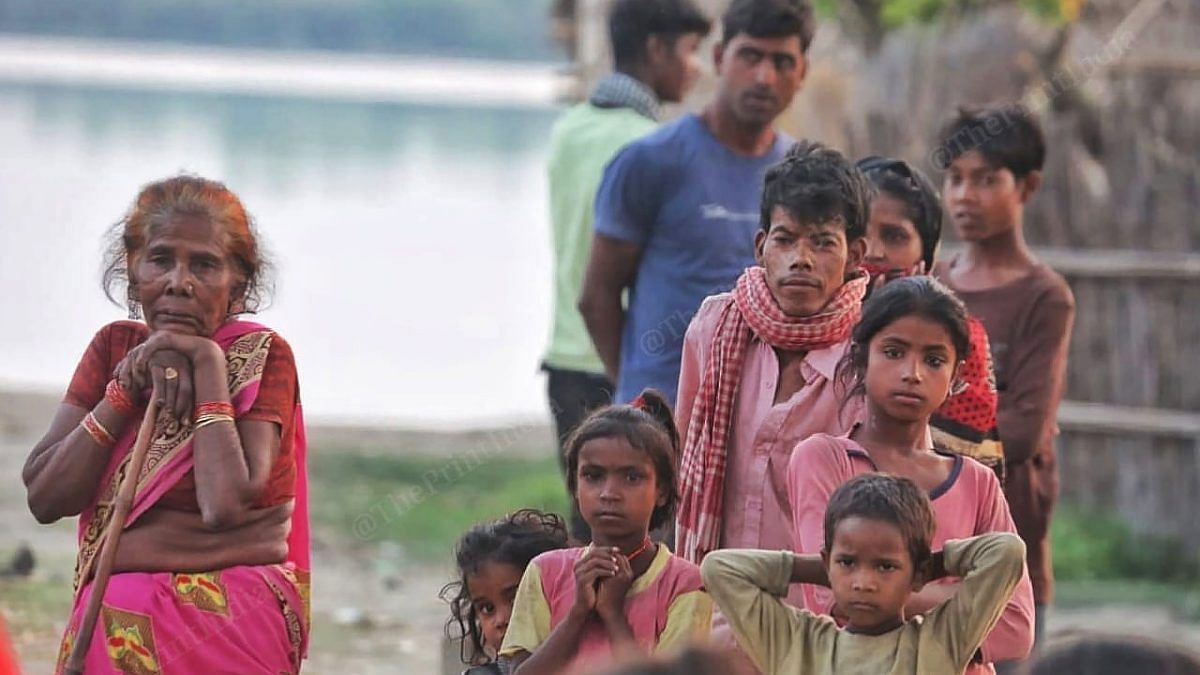
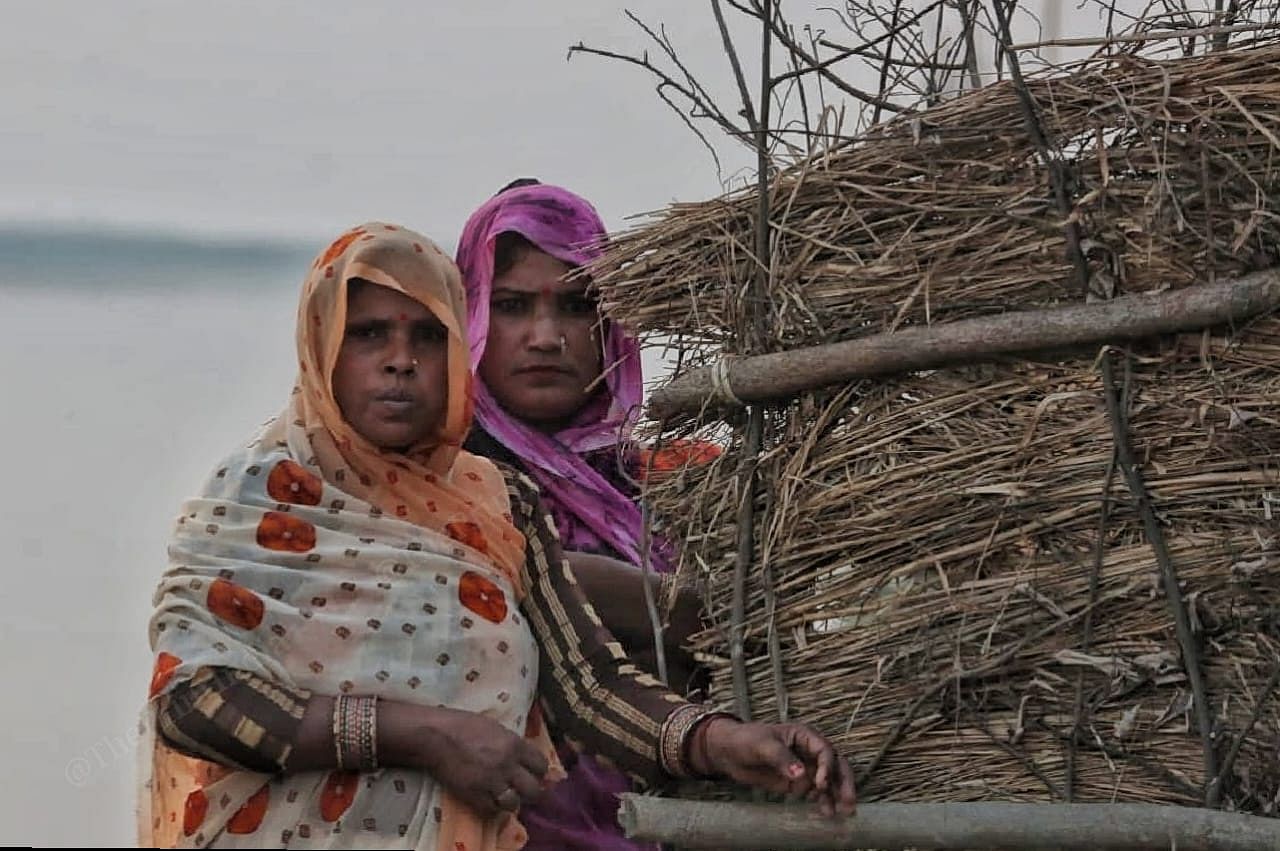
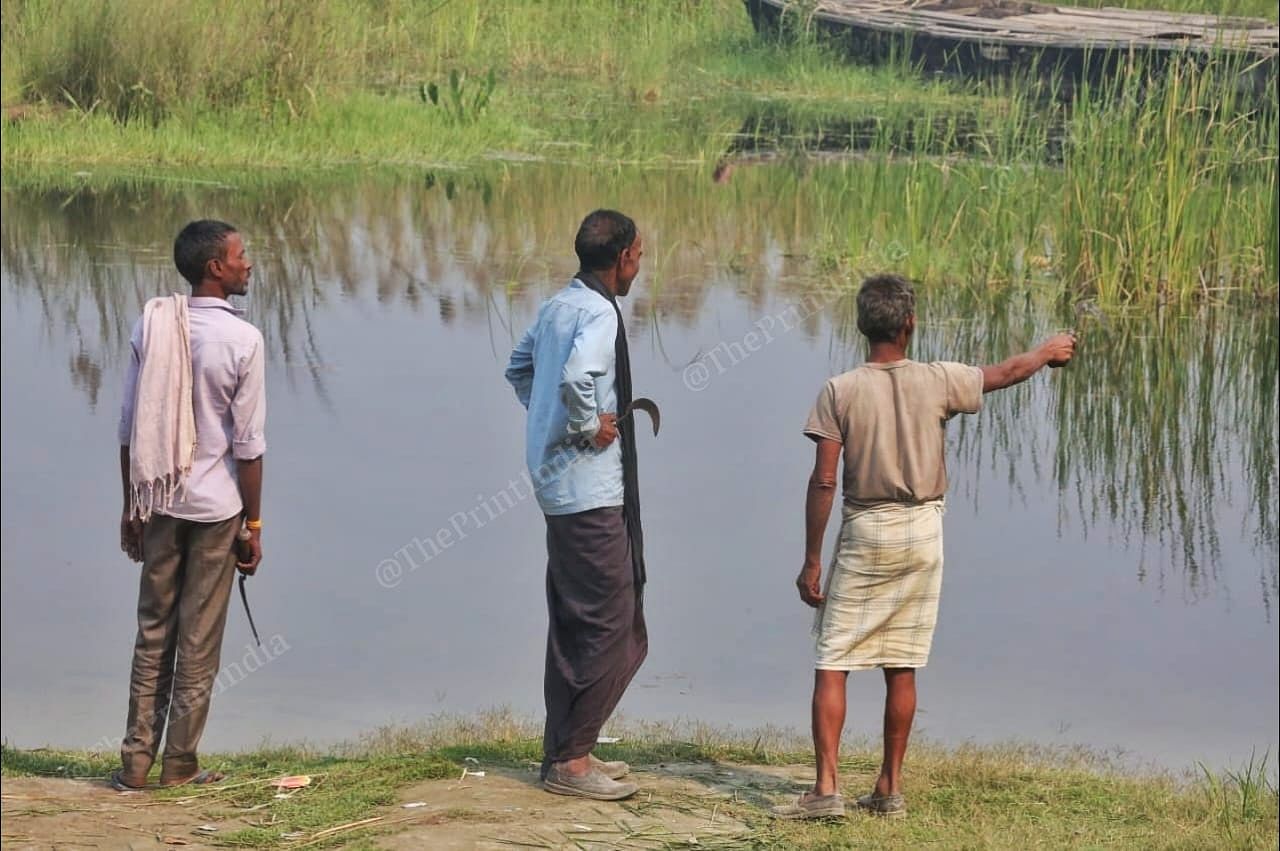
Bharthapur: “We are tormented by sorrows… Nobody is being able to understand our pain,” says octogenarian Kalawati, standing by the Kauriala river that flows along the Bharthapur village in Bahraich district of Uttar Pradesh while looking into the distance.
Kalawati has spent her whole life in Bharthapur village, close to the India-Nepal border. In the remote village, the sorrows of Kalawati and other villagers are aplenty.
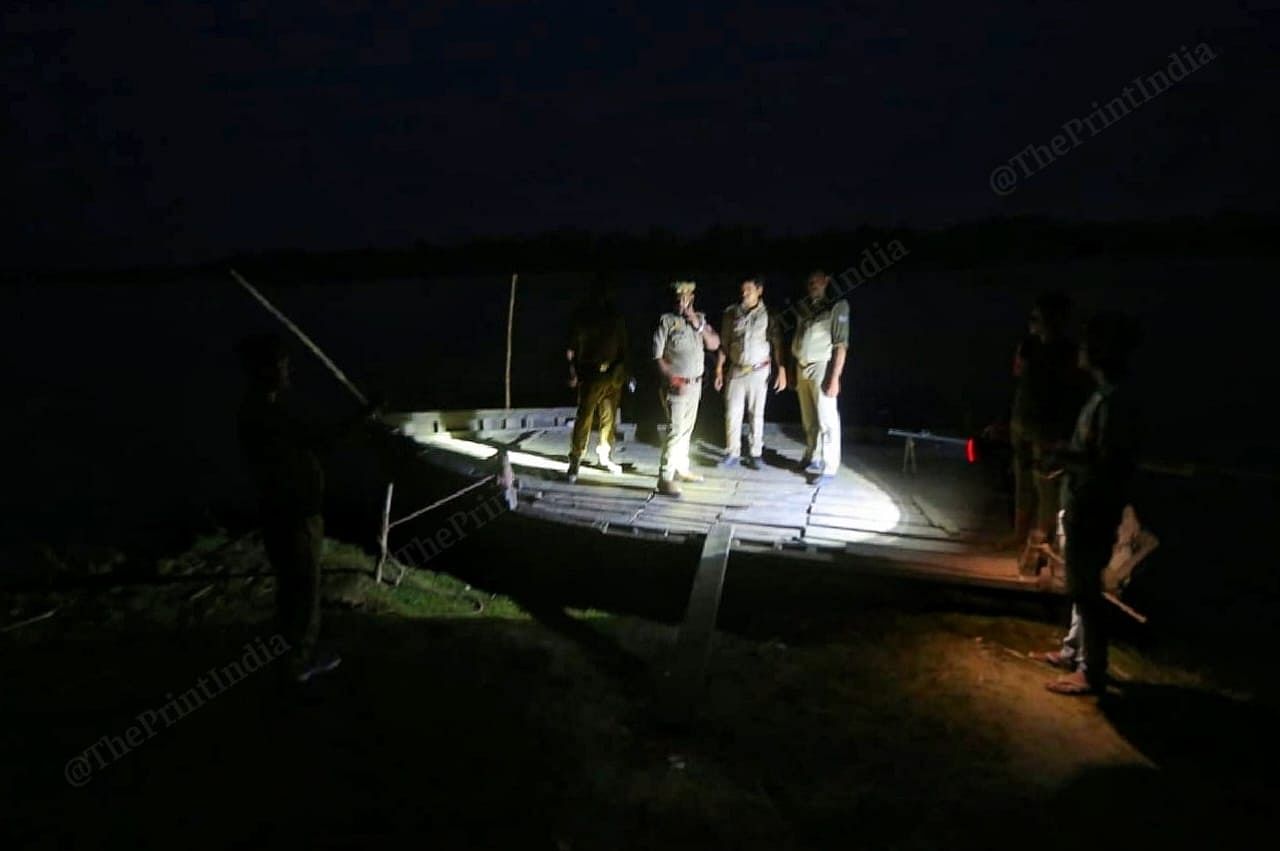
Kalawati (left), who lives in Bharthapur village, says — ‘we are tormented by sorrows’. | Photo: Praveen Jain | ThePrint<img decoding="async" loading="lazy" class="size-full wp-image-2041604" src="https://static.theprint.in/wp-content/uploads/2024/04/WhatsApp-Image-2024-04-15-at-2.41.42-PM.jpeg" alt="The boat traversing through the treacherous crocodile-infested waters of the Girwa river at night. This route connects Bharthapur to India | Photo: Praveen Jain | ThePrint” width=”1280″ height=”851″ srcset=”https://static.theprint.in/wp-content/uploads/2024/04/WhatsApp-Image-2024-04-15-at-2.41.42-PM.jpeg 1280w, https://static.theprint.in/wp-content/uploads/2024/04/WhatsApp-Image-2024-04-15-at-2.41.42-PM-300×199.jpeg 300w, https://static.theprint.in/wp-content/uploads/2024/04/WhatsApp-Image-2024-04-15-at-2.41.42-PM-1024×681.jpeg 1024w, https://static.theprint.in/wp-content/uploads/2024/04/WhatsApp-Image-2024-04-15-at-2.41.42-PM-768×511.jpeg 768w, https://static.theprint.in/wp-content/uploads/2024/04/WhatsApp-Image-2024-04-15-at-2.41.42-PM-696×463.jpeg 696w, https://static.theprint.in/wp-content/uploads/2024/04/WhatsApp-Image-2024-04-15-at-2.41.42-PM-1068×710.jpeg 1068w, https://static.theprint.in/wp-content/uploads/2024/04/WhatsApp-Image-2024-04-15-at-2.41.42-PM-632×420.jpeg 632w, https://static.theprint.in/wp-content/uploads/2024/04/WhatsApp-Image-2024-04-15-at-2.41.42-PM-150×100.jpeg 150w” sizes=”(max-width: 1280px) 100vw, 1280px” />A boat traverses the treacherous crocodile-infested waters of the Girwa river at night. This is the only route to Bharthapur village, which lies close to the India-Nepal border | Photo: Praveen Jain | ThePrintWhile it is exceedingly difficult for Bharatpur villagers to access basic resources, police also face challenges in extending timely help when the village needs them | Photo: Praveen Jain | ThePrint
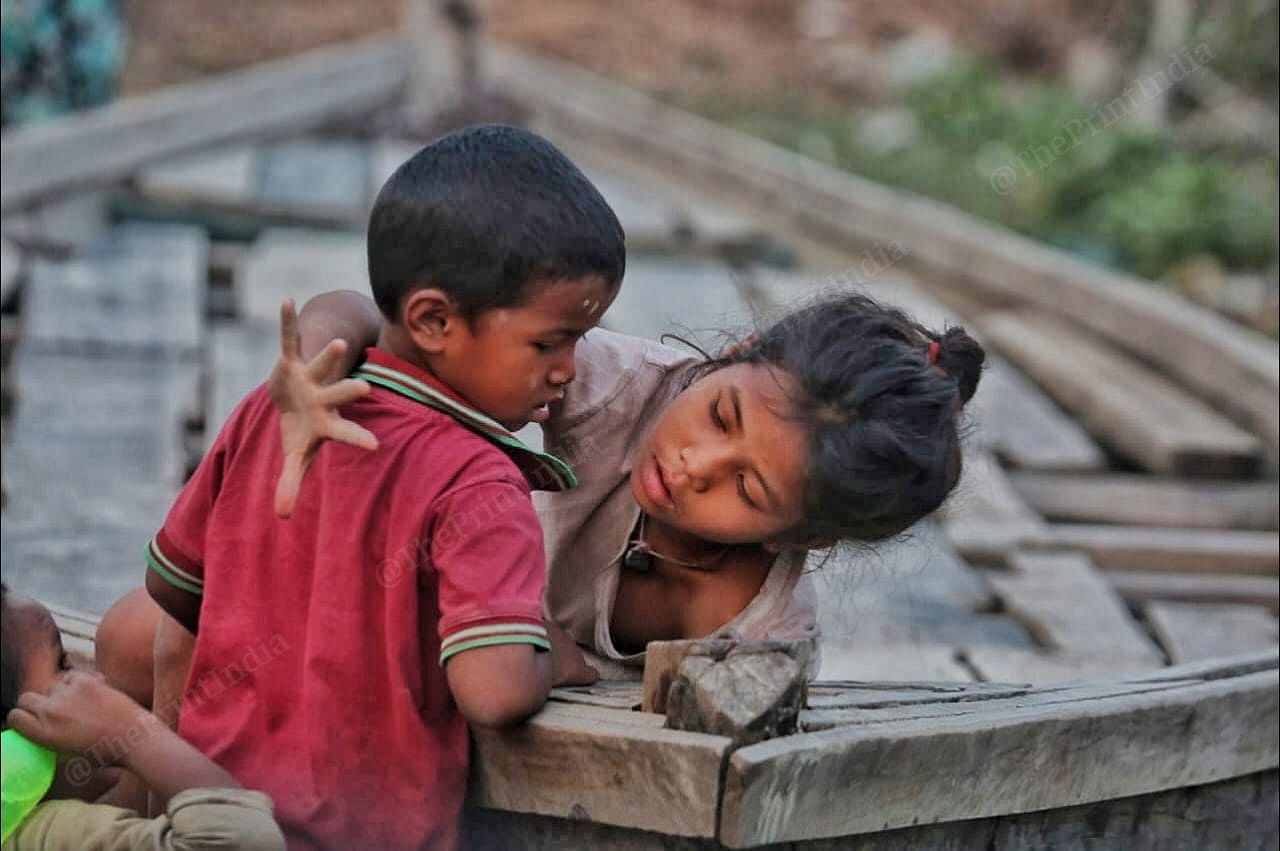
Children finding little joys in their everyday life in Bharthapur while playing on an abandoned boat | Photo: Praveen Jain | ThePrint
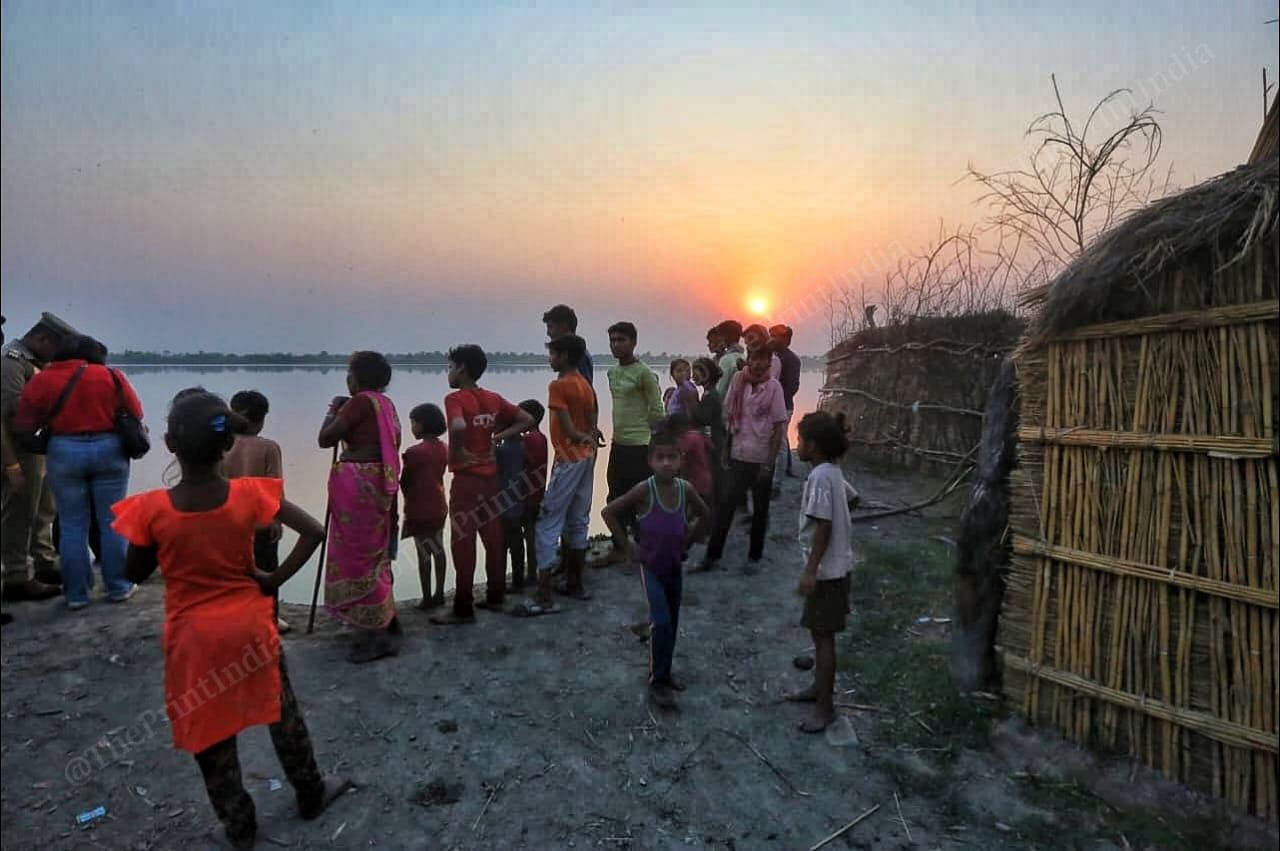
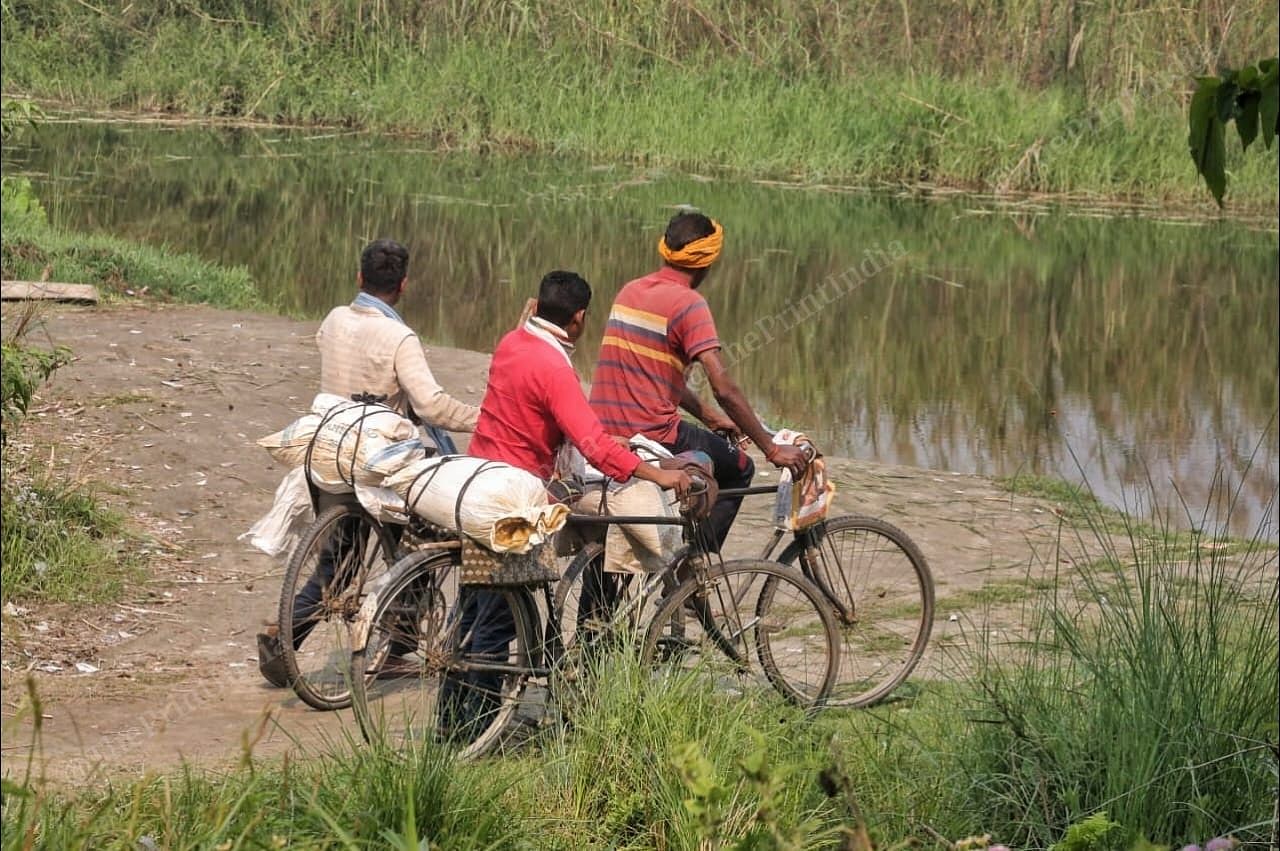
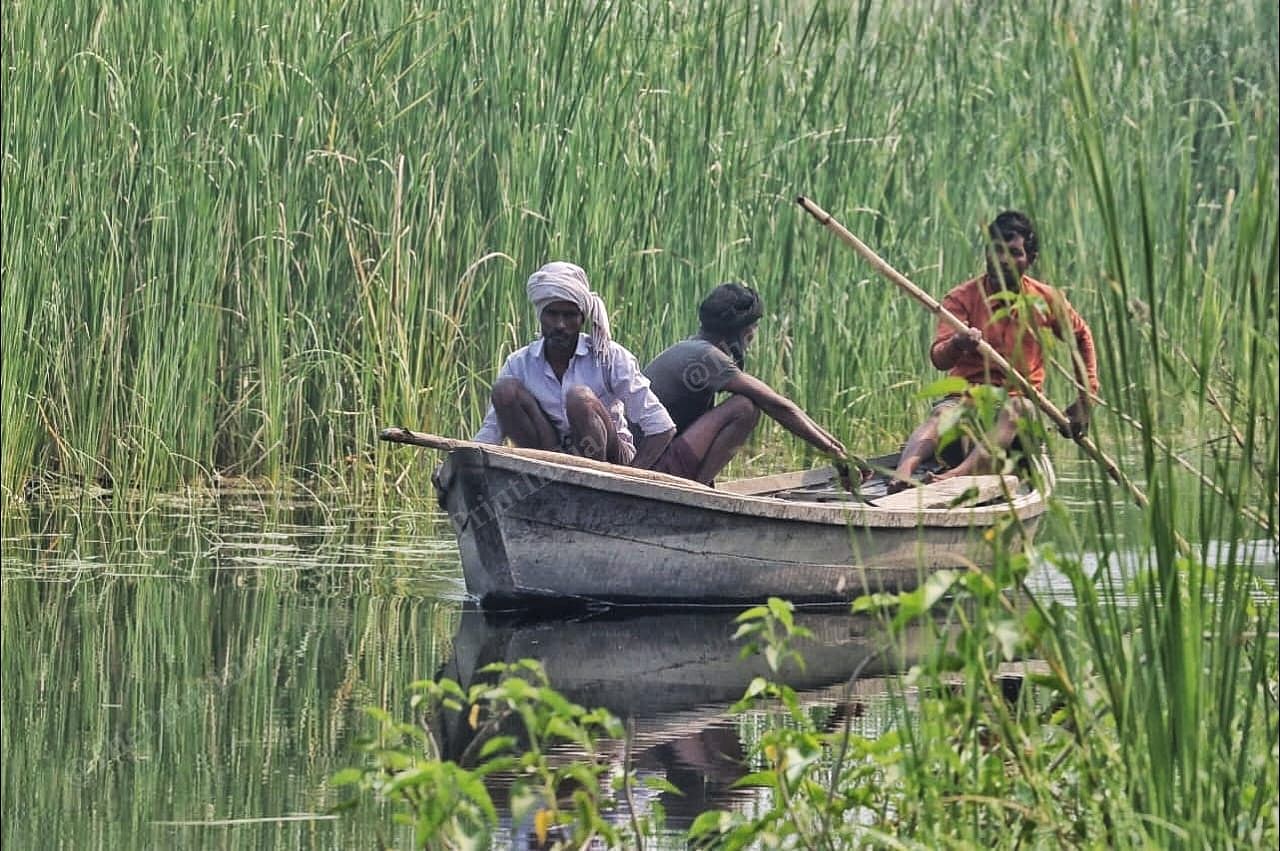
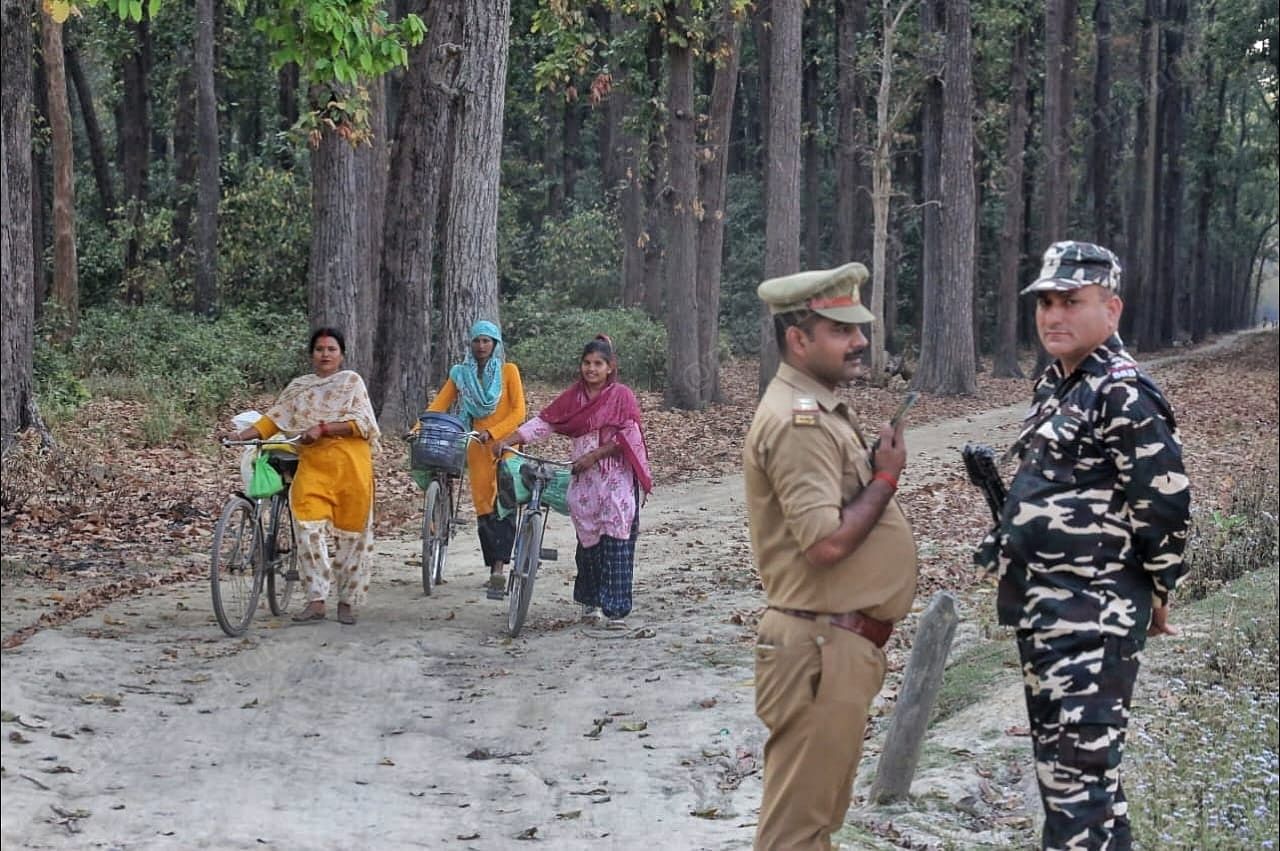
The only way to reach Bharthapur is an arduous boat ride over the crocodile-infested waters of the Girwa River. After the boat ride comes another challenge—a long six kilometre walk through the thick of the Katarniaghat jungle to reach the remote village on the banks of the Girwa River.
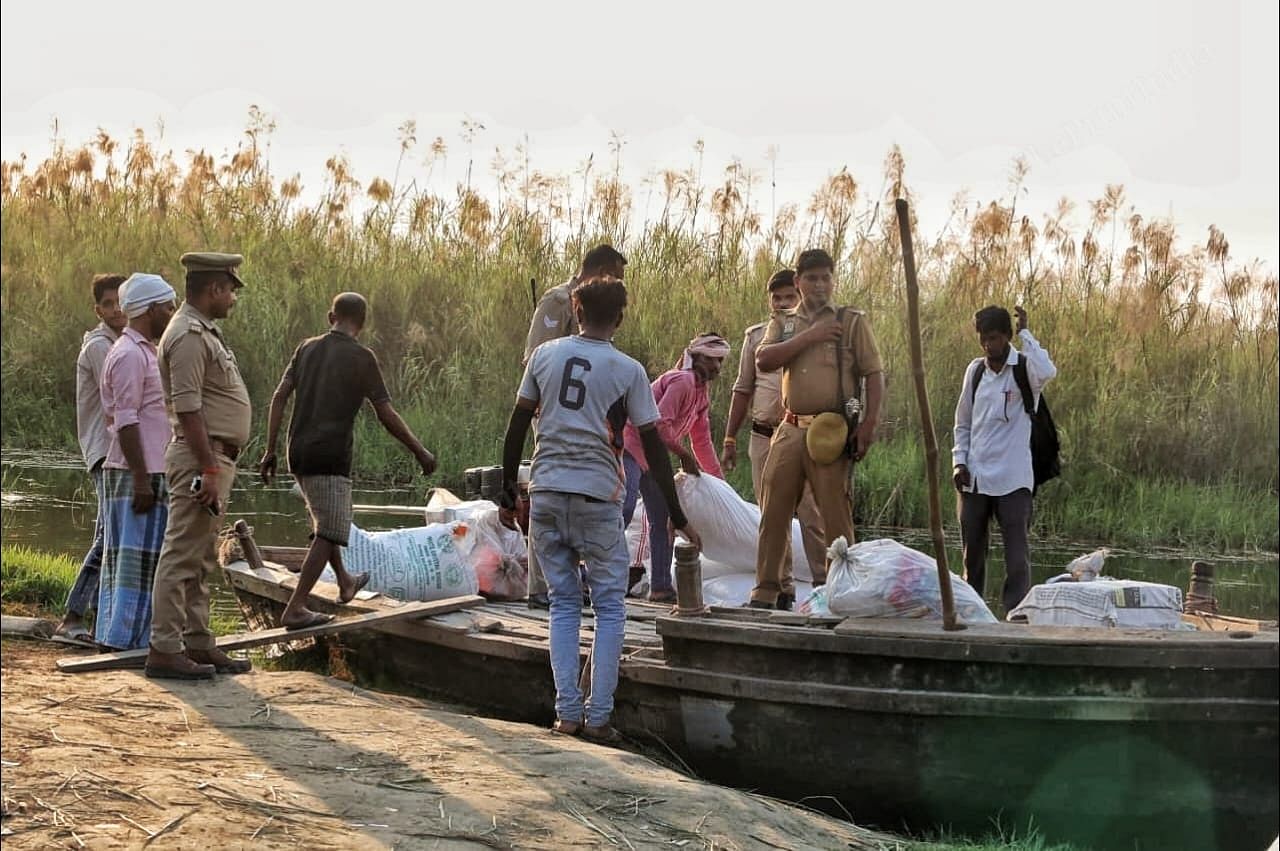
The route is an equaliser. Everybody, from the villagers to the security personnel and polling parties to be stationed in the Bharthapur village during the upcoming Lok Sabha elections has to take this route to and from the village, risking the threat of an ambush by crocodiles in the water and wild tuskers, tigers, and leopards in the jungle.
Children in Bharthapur often miss classes because teachers, who also have to cross the river and jungle to reach the primary school in the village, are often a no-show | Photo: Praveen Jain | ThePrint
Consequently, the teachers, who come from outside the village, often end up missing classes in the only primary school in the village.
The nearest functioning government hospital is over 50 km away, in Motipur. The houses do not have electricity and rely on small solar panels to power their everyday life. The village also gets flooded by the Kauriala river every year.
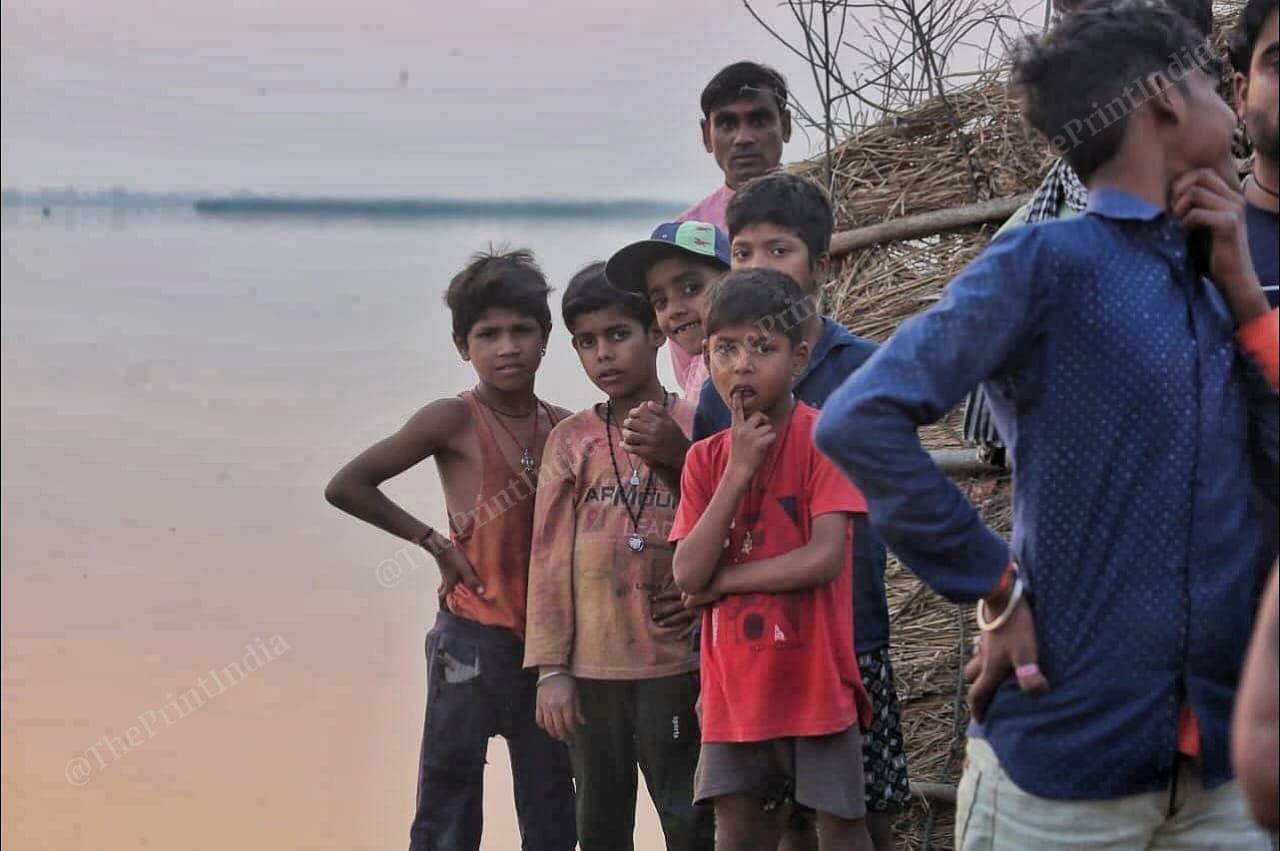
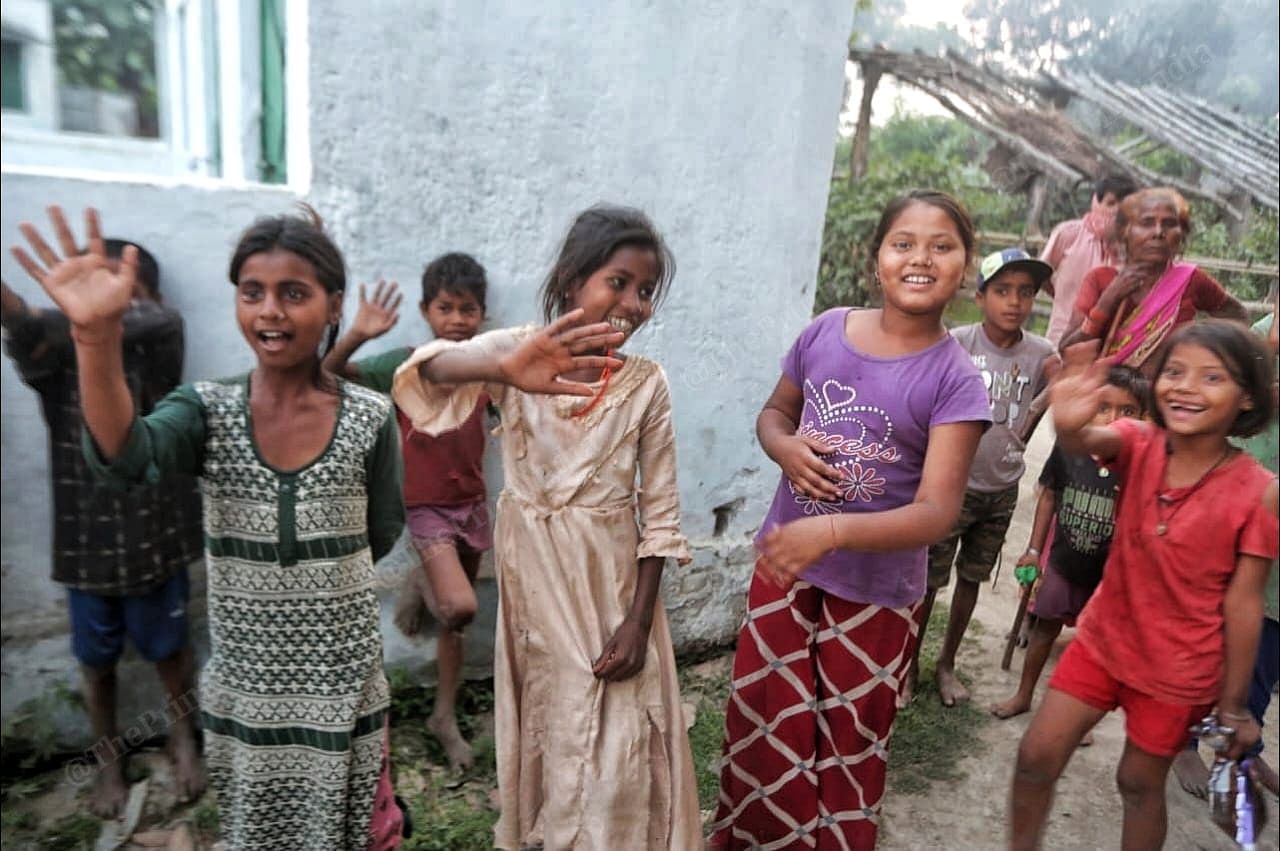
Many children in Bharthapur village spend their childhoods cut off from the outside world | Photo: Praveen Jain | ThePrint
On Bharthapur’s side of the Girwa River, five other villages — Kartaniya, Amba, Bardiya, Fakirpuri, and Bisunapur — near the India-Nepal border remain in a communication fog as far as the world outside is concerned. These villages have never had an Indian mobile network, but often get networks from Nepal instead. So, many of the villagers have Nepali SIM cards on their phones.
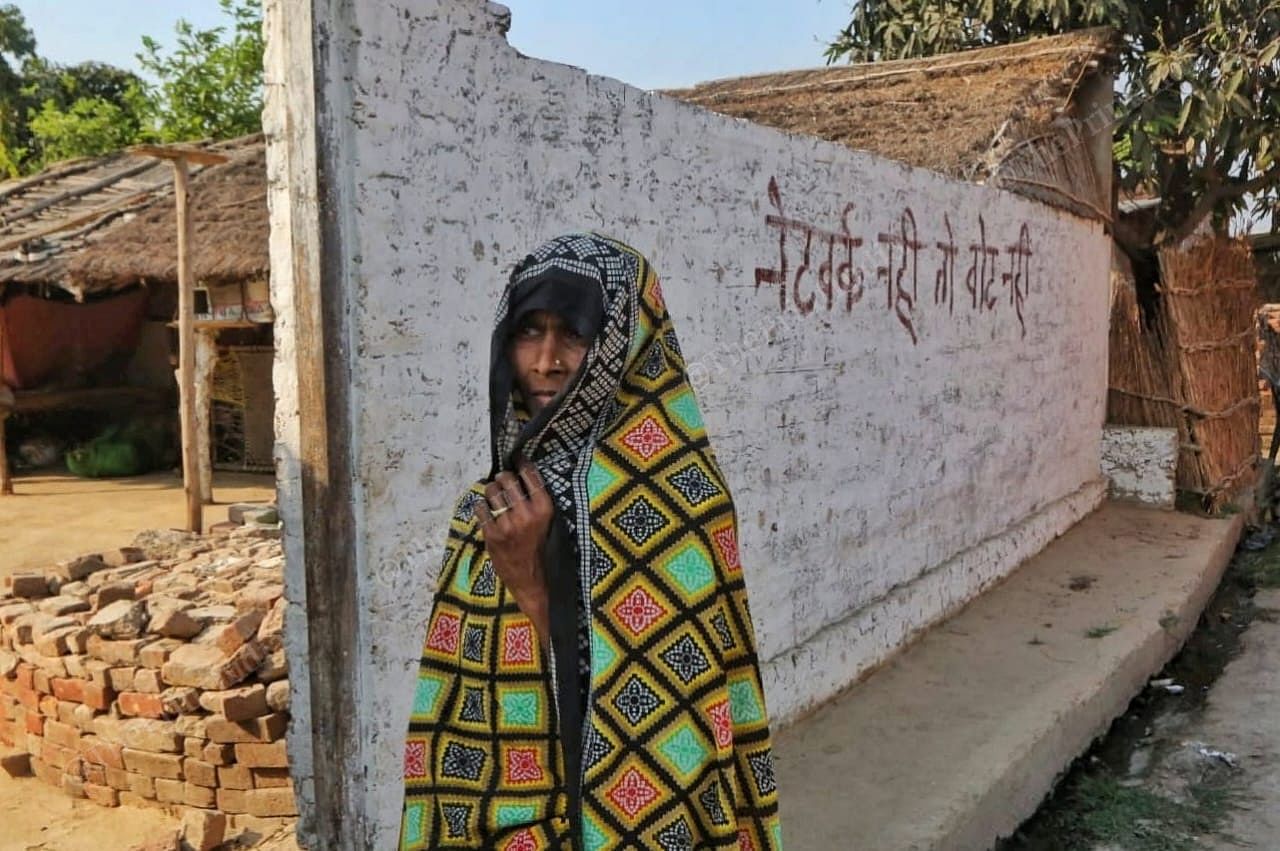
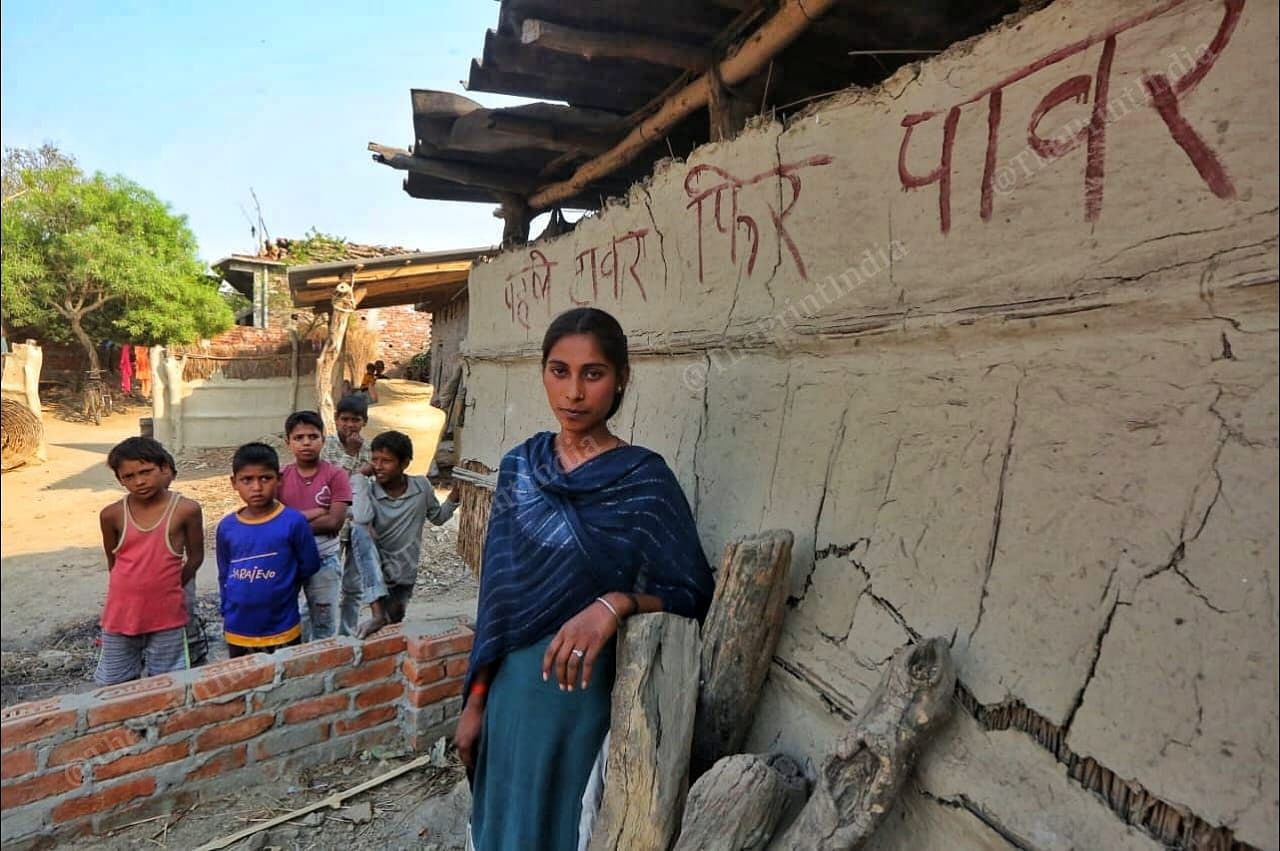
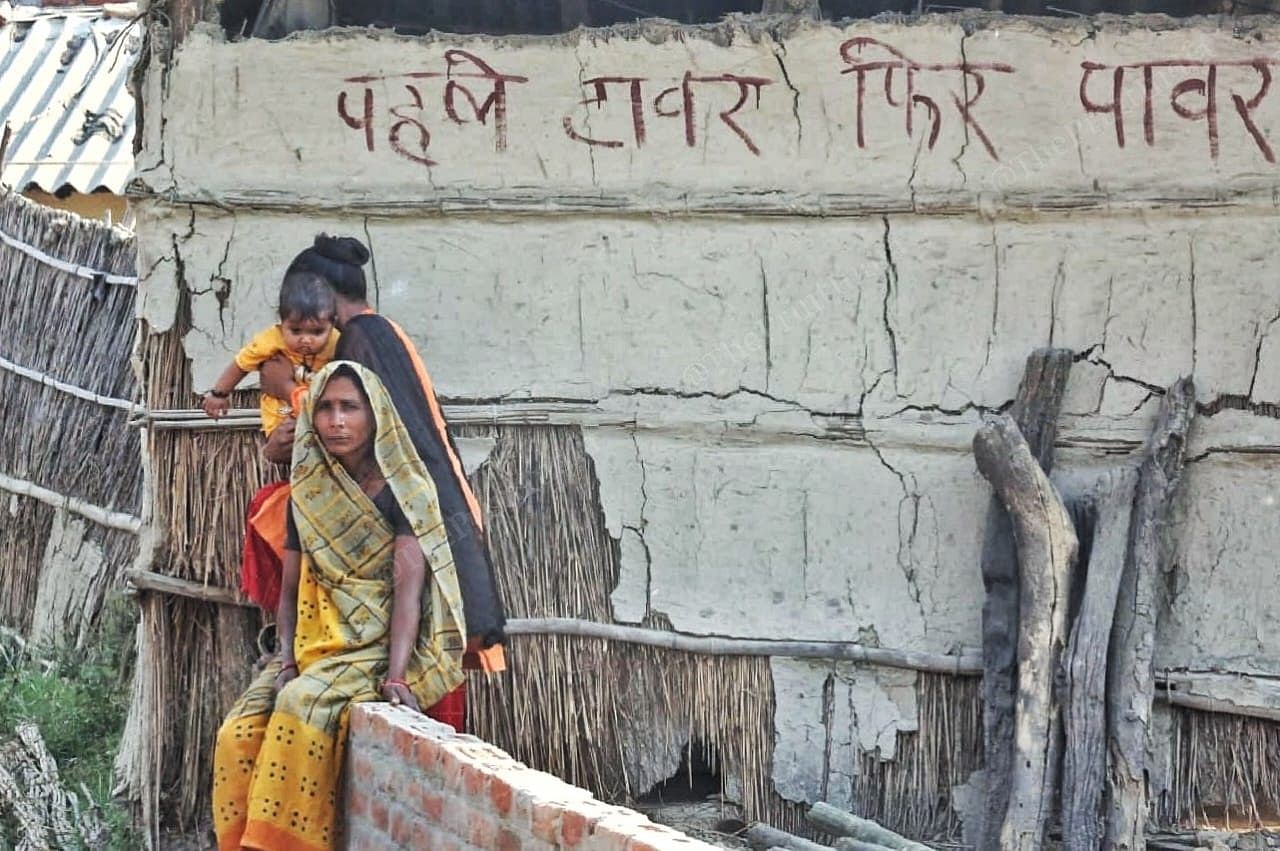
A few months ago, they took matters into their hands and decided to boycott the Lok Sabha elections if they don’t start getting mobile networks. All walls in the villages are currently painted with slogans such as “No tower, No power” and “No network. No vote”.
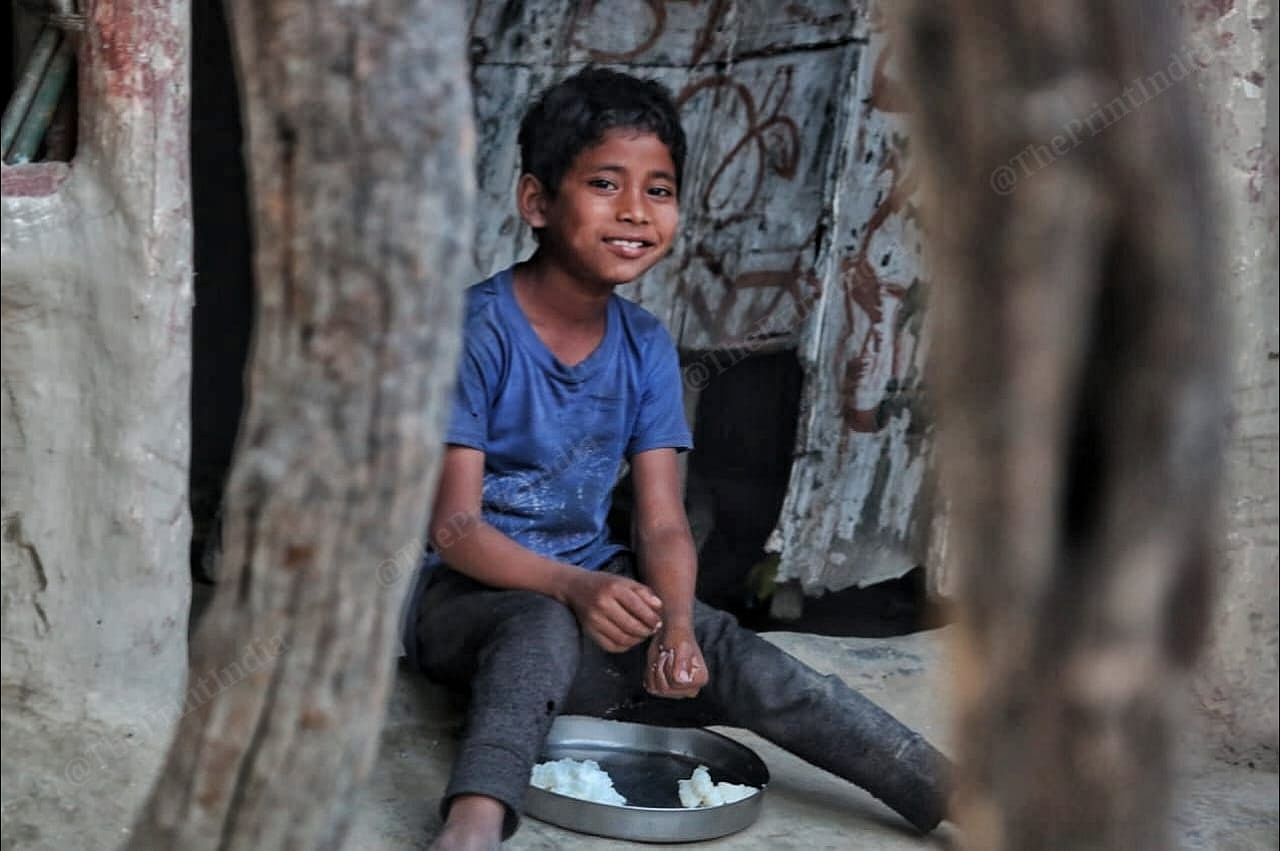
A child eats rice and salt in Bharthapur village. The women of the village often miss their monthly free ration runs, so now the authorities get ration to the village instead | Photo: Praveen Jain | ThePrint
The authorities sprung into action, and made the lone BSNL tower near the villages operational again, leading to a slight reprieve in the village. But, villagers say their demand for private networks will continue.
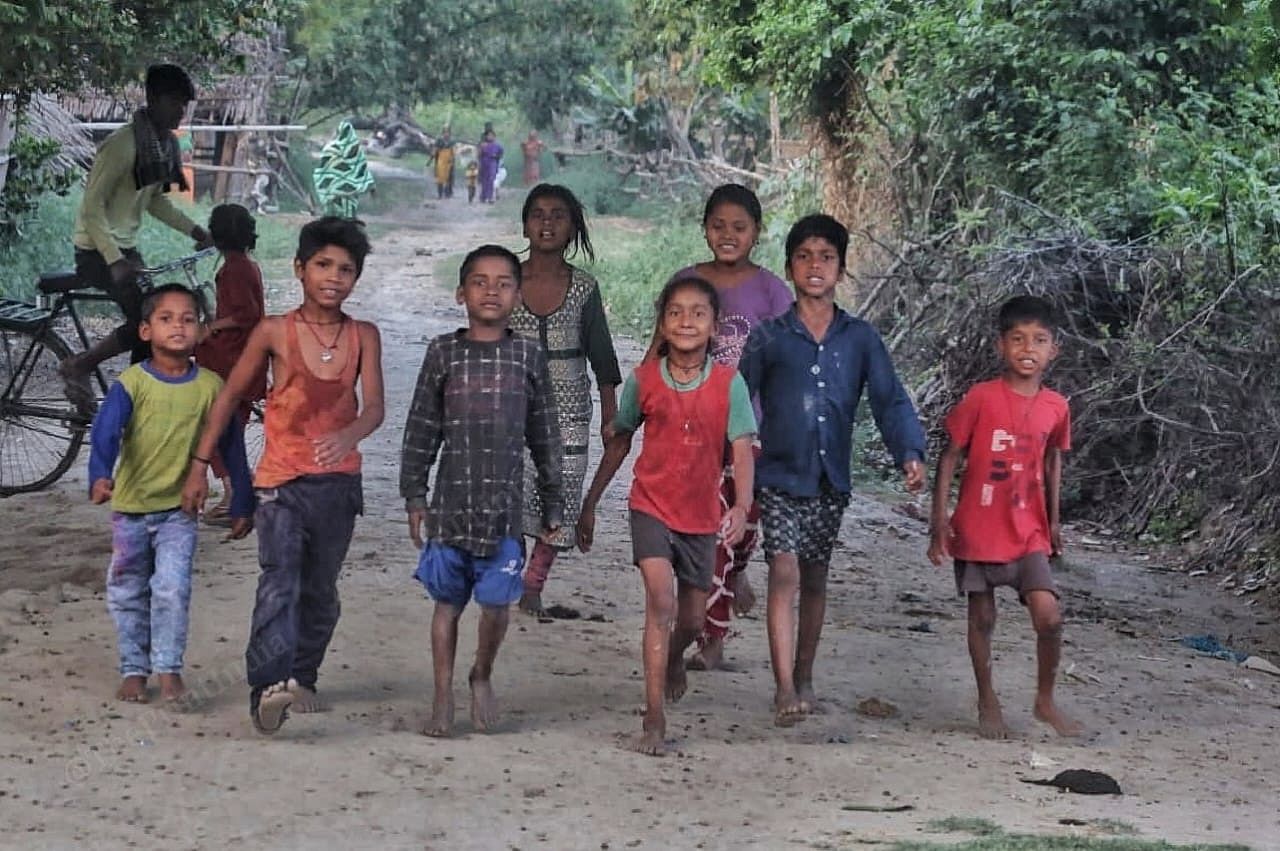
Children playing in Bharthapur, lost in their own world, far from dreams of digital India and development | Photo: Praveen Jain | ThePrint
These villages are far from dreams and promises of digital India and development, cutoff from the rest of the country owing to their difficult terrain. A huge part of this area falls under the Katarnia Ghat Wildlife Sanctuary— a mosaic of sal and teak forests, lush grasslands, swamps, and wetlands.
The forests are home to gharials, tigers, rhinos, elephants, Gangetic dolphins, swamp deers, and vultures, making the terrain extremely treacherous. The treacherous terrain often cuts off the six villages from valuable resources, including proper healthcare and education.
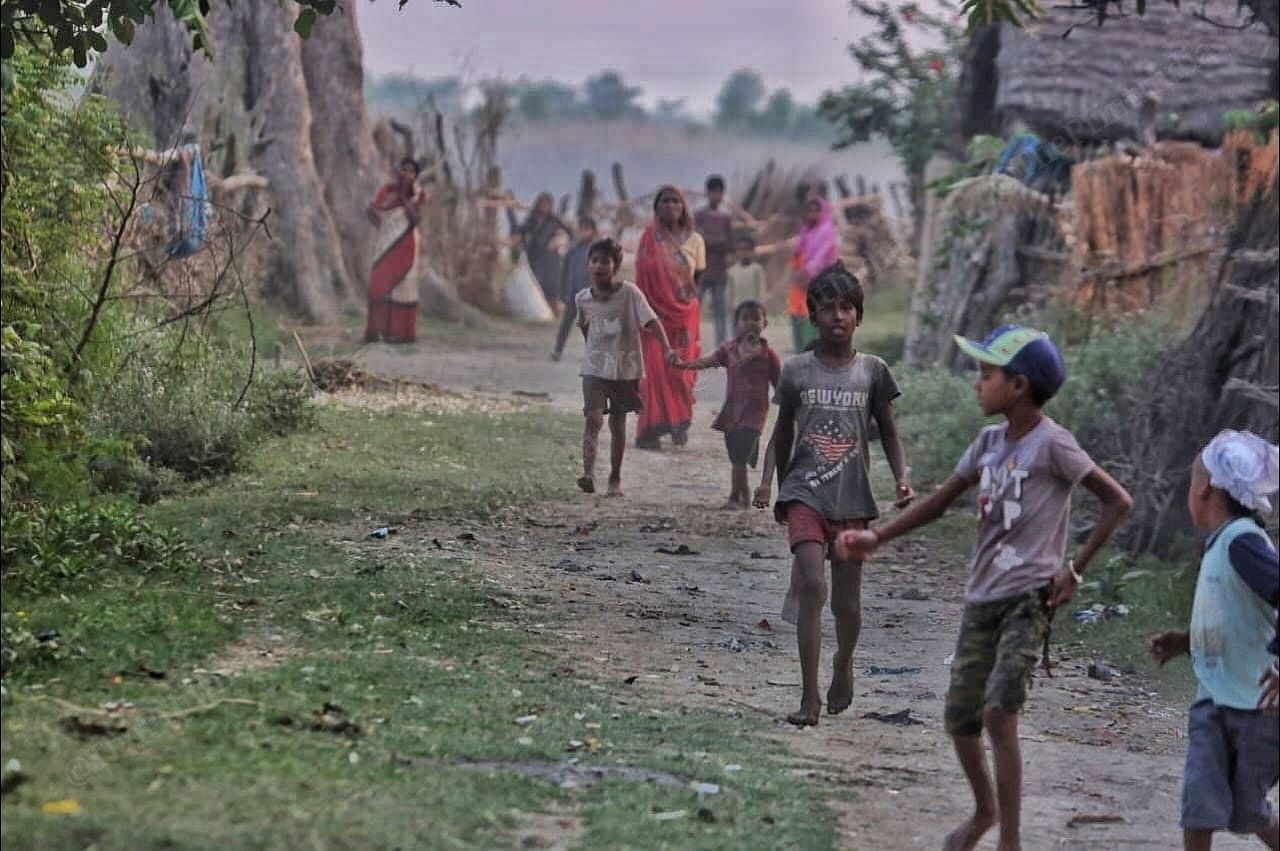
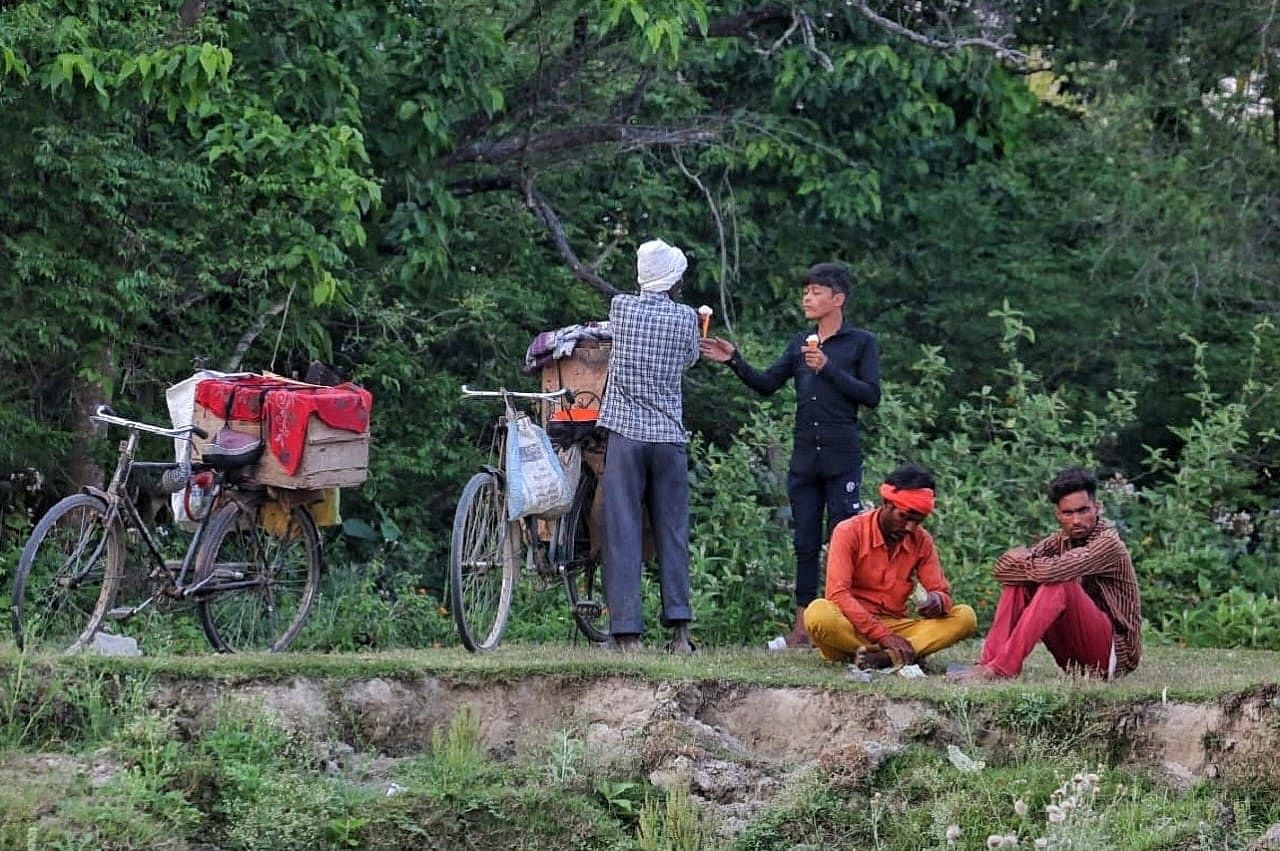
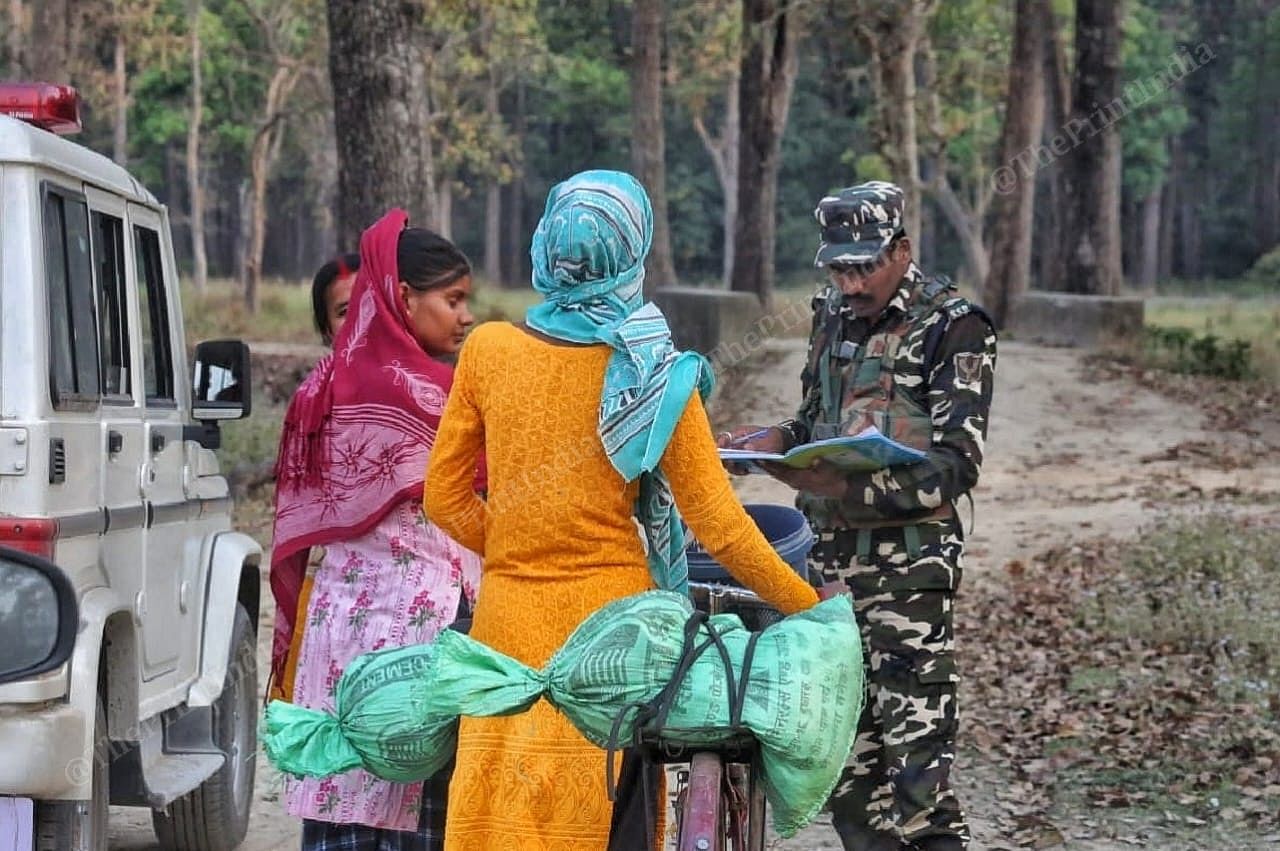
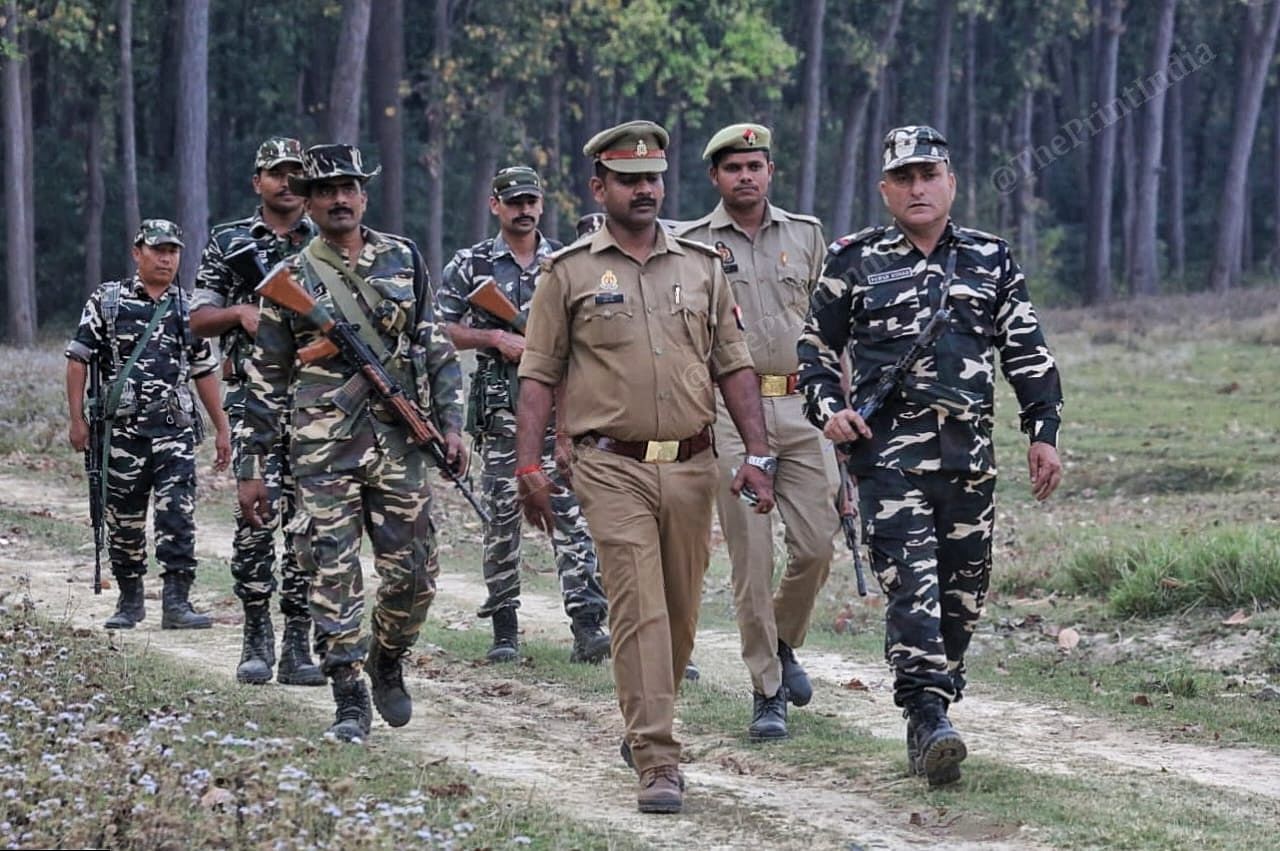
Children roam in Bharthapur village| Photo: Praveen Jain | ThePrintBharthapur struggles for the most basic facilities like pregnancy care. The nearest functioning government hospital is over 50 kilometres away | Photo: Praveen Jain | ThePrintBharthapur has thatched-roof homes and only one pucca construction — the primary school.| Photo: Praveen Jain | ThePrintTravellers enjoy icecreams after their boat ride on the Girwa river| Photo: Praveen Jain | ThePrintThe path to the village is an equaliser. Everybody, from residents to police and election officials, have to take the river and jungle route | Photo: Praveen Jain | ThePrintVillagers wait for a boat near the banks of the Girwa river | Photo: Praveen Jain | ThePrintTravellers await boats to cross the Girwa River. The boats usually charge Rs 30 for a trip| Photo: Praveen Jain | ThePrintVillagers gear up for their boat ride across the Girwa river | Photo: Praveen Jain | ThePrintWomen walk towards the India-Nepal border. The two countries have a tradition of free movement of people across the border | Photo: Praveen Jain | ThePrintIndia and Nepal share a porous border. Here, a Sashastra Seema Bal (SSB) official conducts a check at the India-Nepal border near Katarniaghat jungle | Photo: Praveen Jain | ThePrintJoint patrolling by the police and the SSB at the India-Nepal border | Photo: Praveen Jain | ThePrintLacking mobile networks, the villagers are saying ‘No tower, No power’ as the country goes to the polls | Photo: Praveen Jain | ThePrintManisha from Bardiya village says they have been left behind because of the lack of mobile networks | Photo: Praveen Jain | ThePrintSlogans demanding mobile networks abound on the walls in Bardiya village | Photo: Praveen Jain | ThePrint